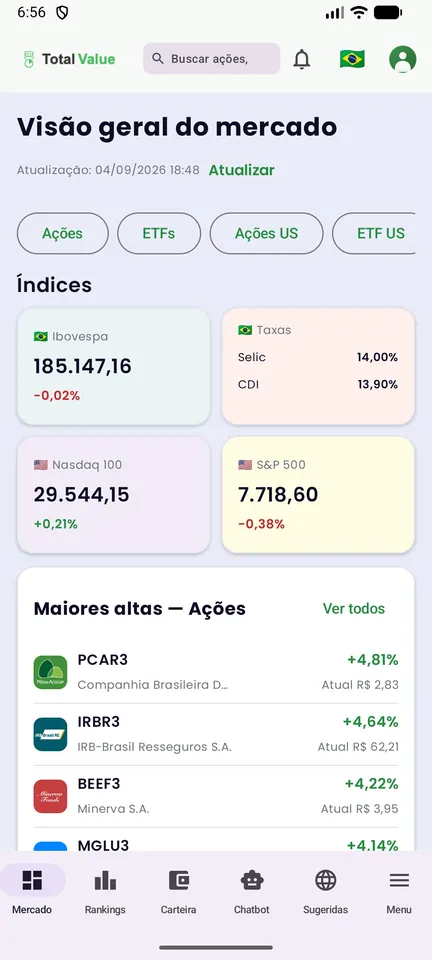
Market Indices
 DOW 30
0.28%
+146,42 pts
NASDAQ 100
1.09%
+315,88 pts
S&P 500
0.70%
+53,09 pts
FED / 10-YR























Highest Market Cap German ETF
| Code | Market Cap |
|---|---|
| No data available | |


Highest Market Cap UK ETF
| Code | Market Cap |
|---|---|
| No data available | |




Top Losers BDR US Highlights
| Code | Variation |
|---|---|
| -1.26% |























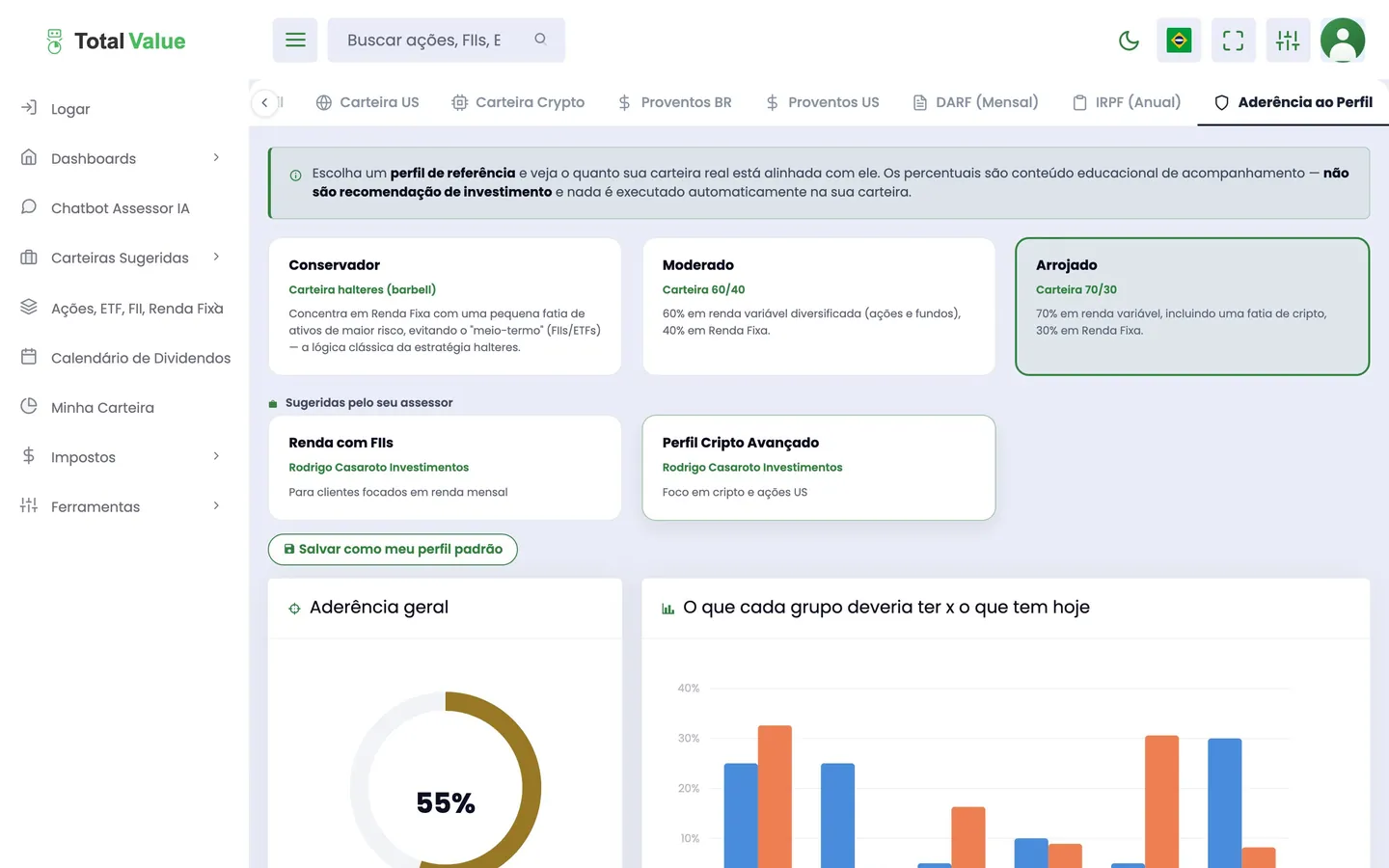
Portfolios Suggested by Artificial Intelligence
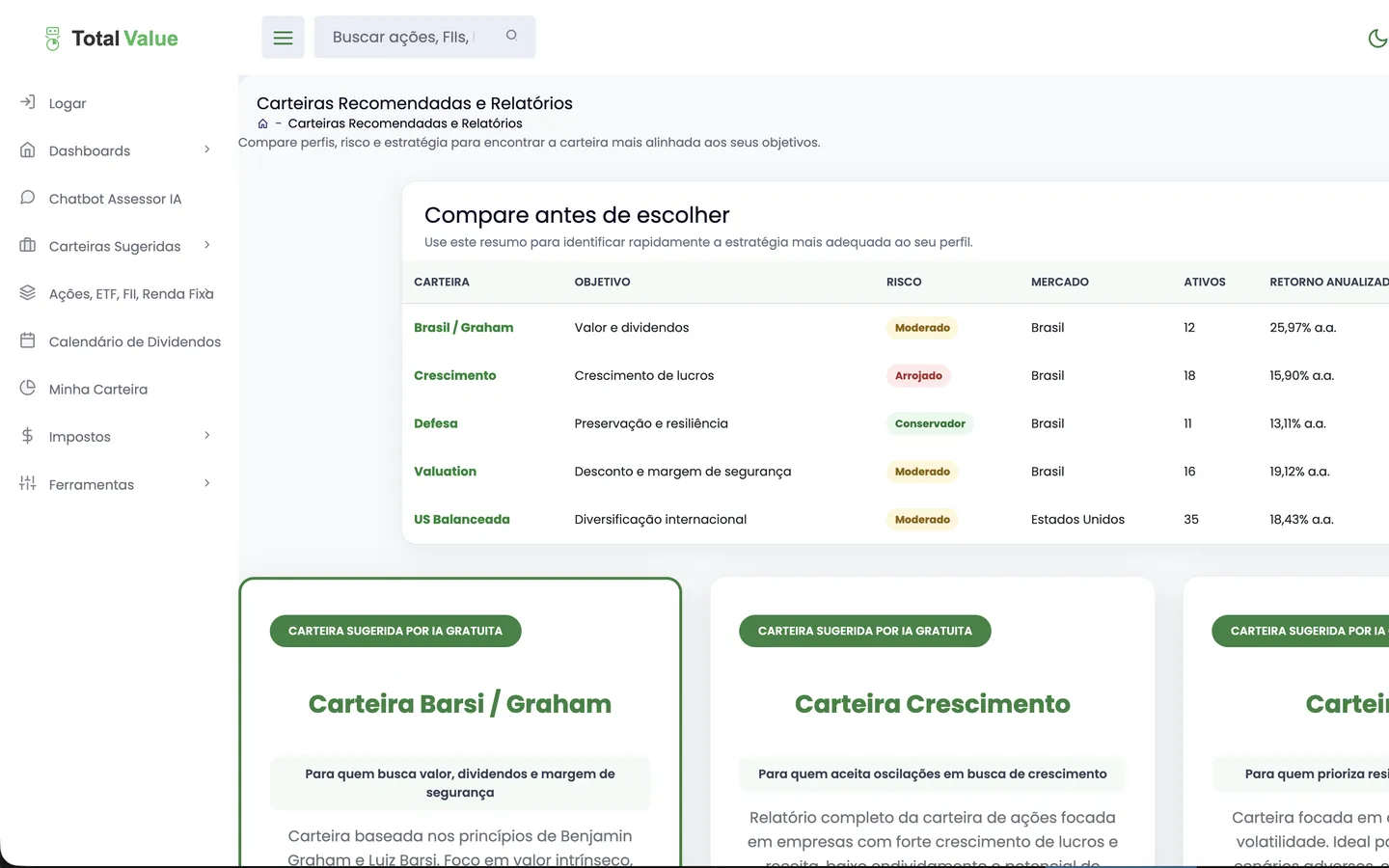
View all portfoliosNot sure where to start? Choose a ready-made portfolio, built and kept up to date by AI for your profile — from conservative to aggressive, with Brazilian or US stocks — and review the full composition, each asset's rating and the historical return before deciding.
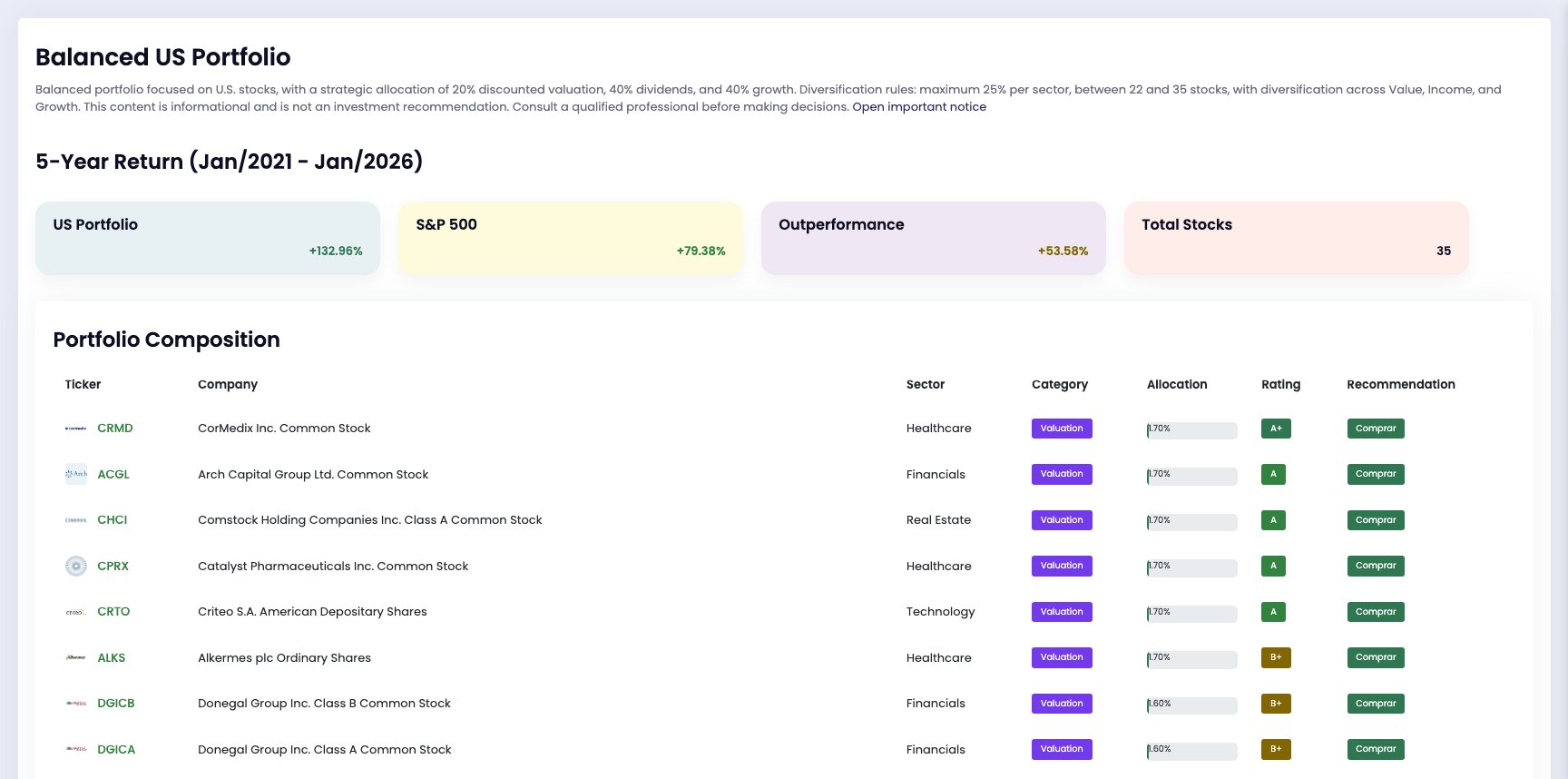
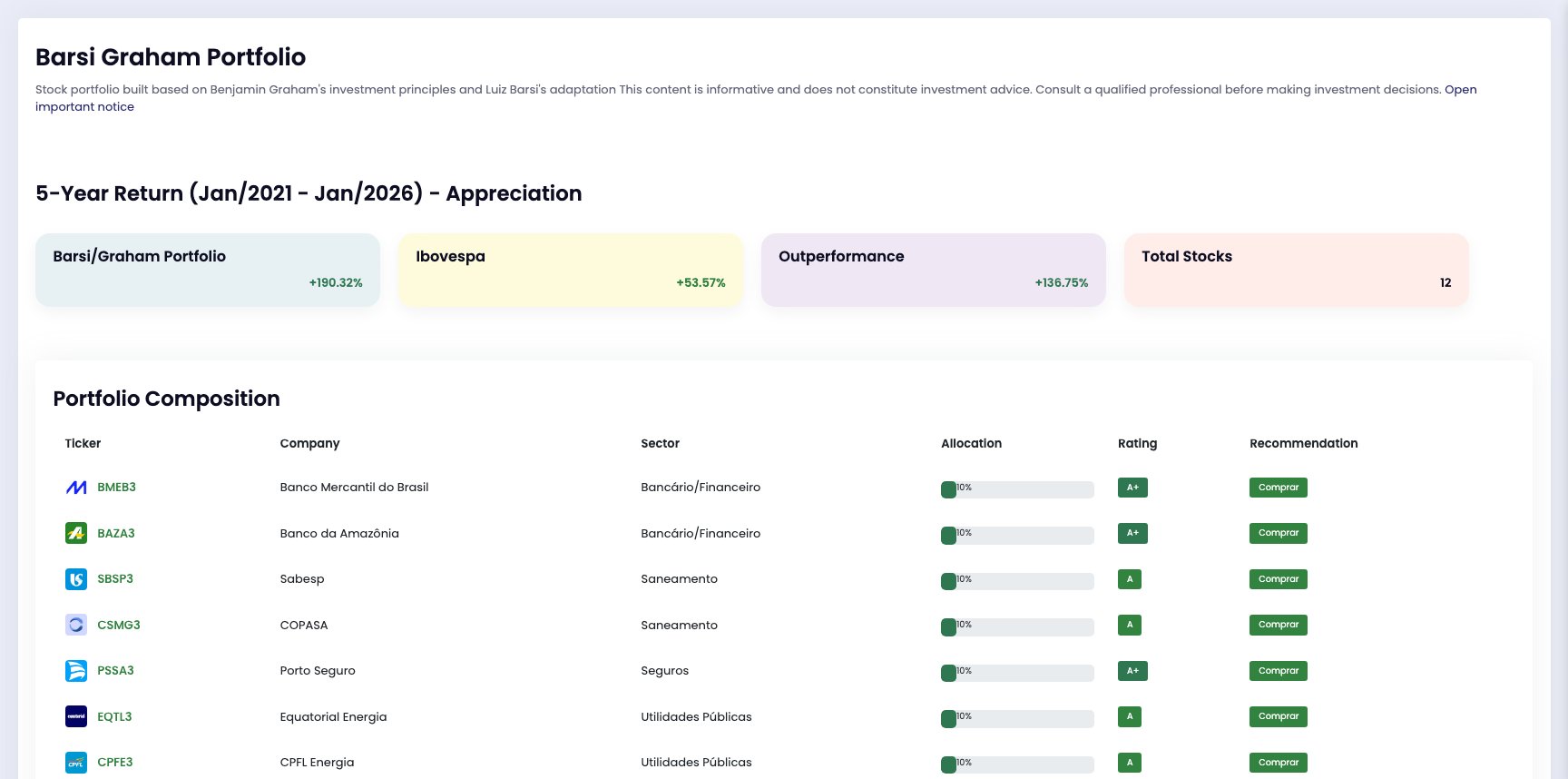
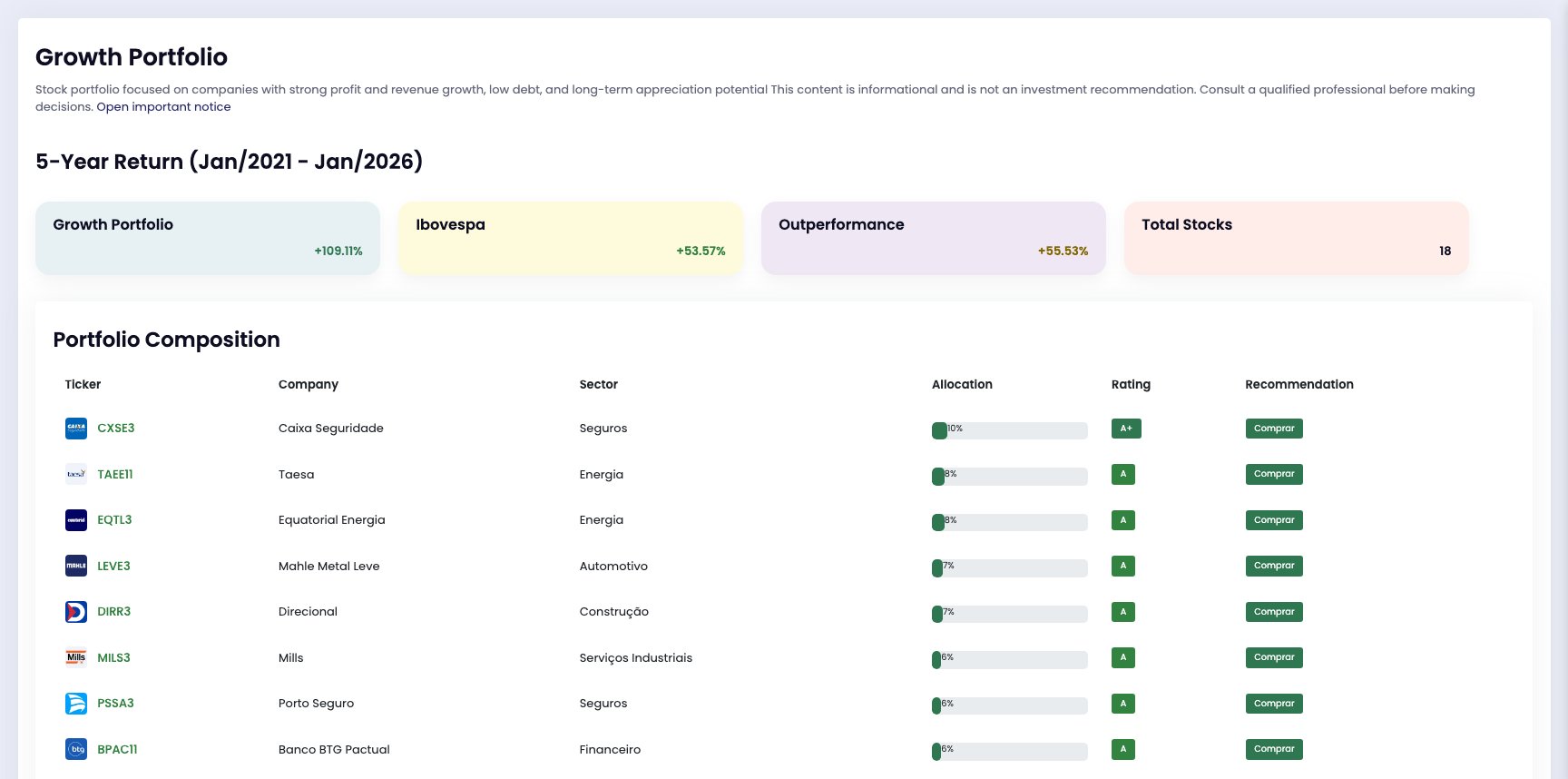
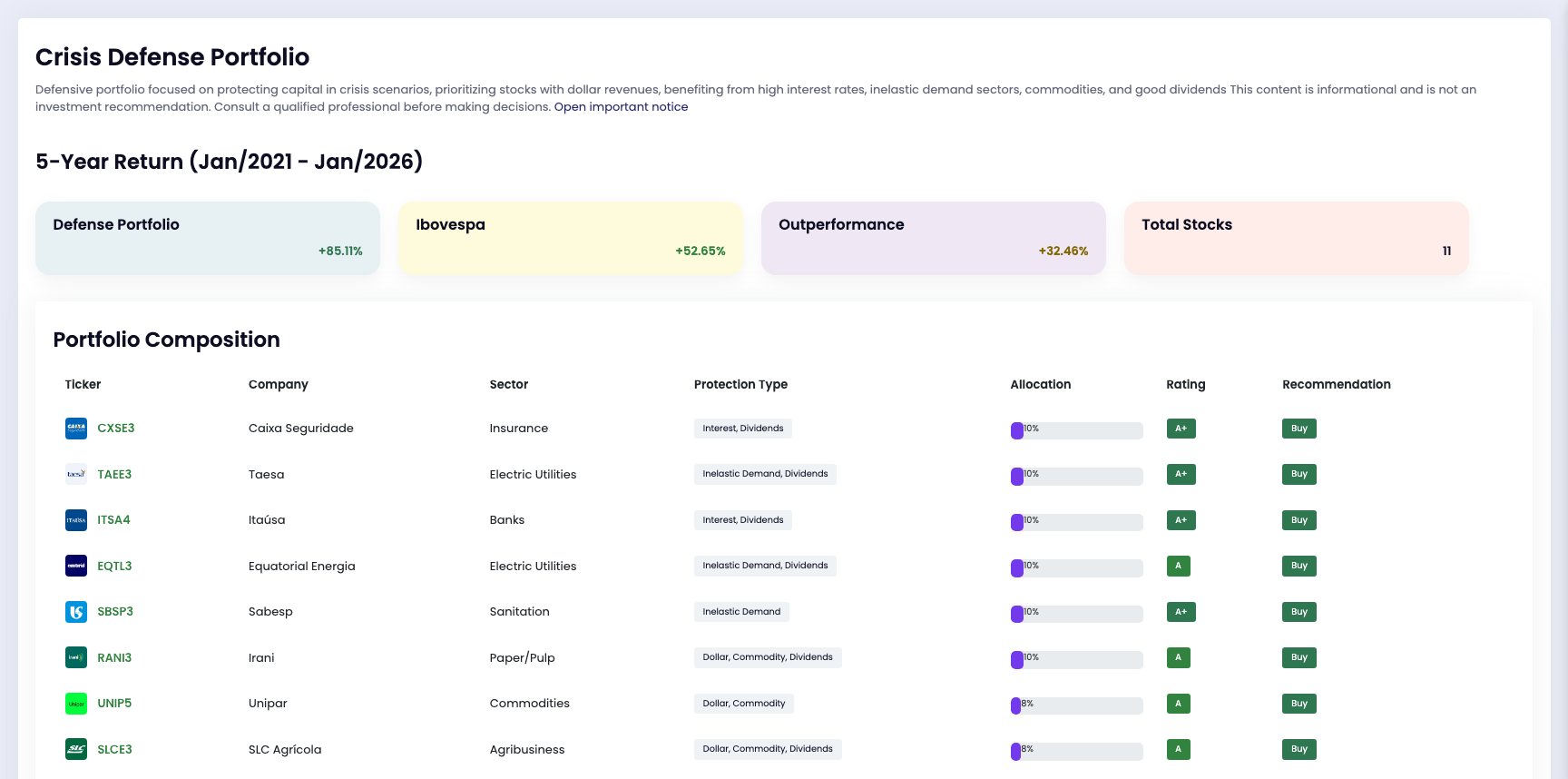
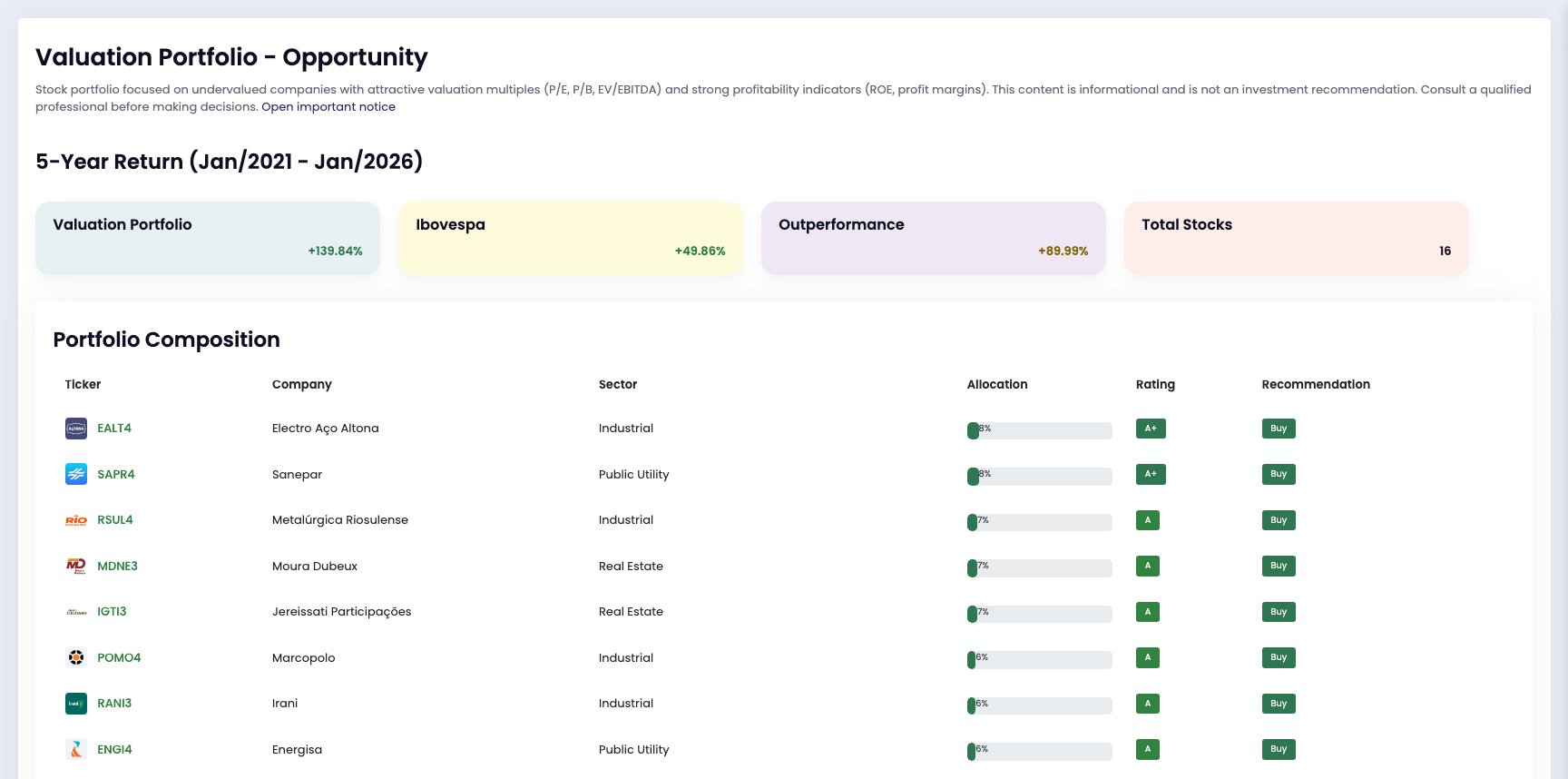
Educational content. The portfolios are not investment recommendations; past performance does not guarantee future results.
Investment Advisor Chatbot
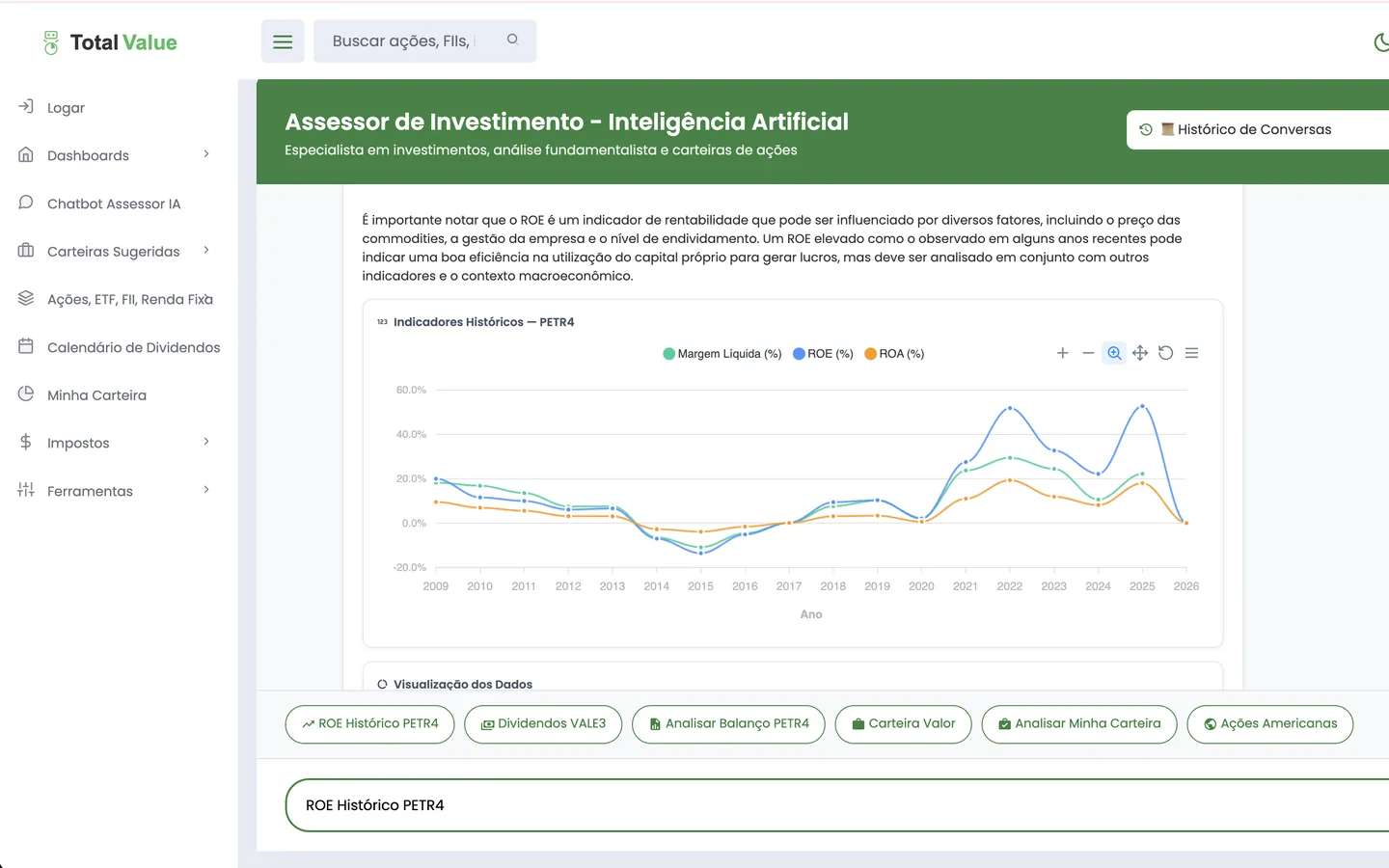
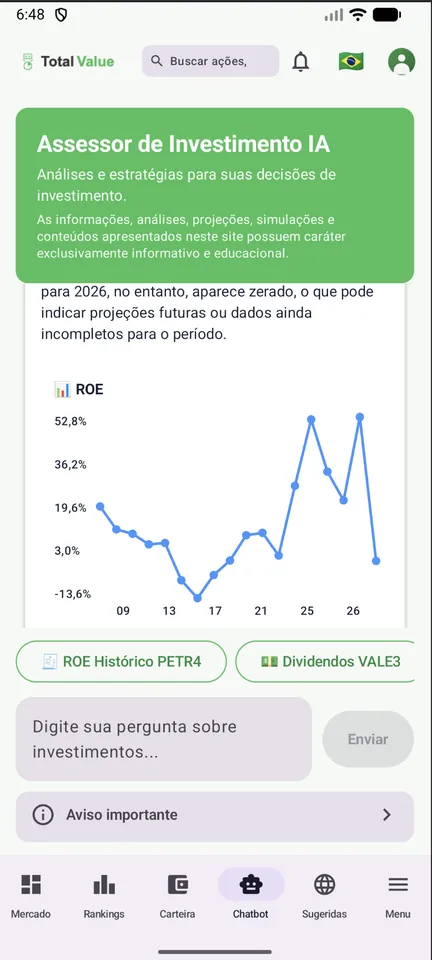
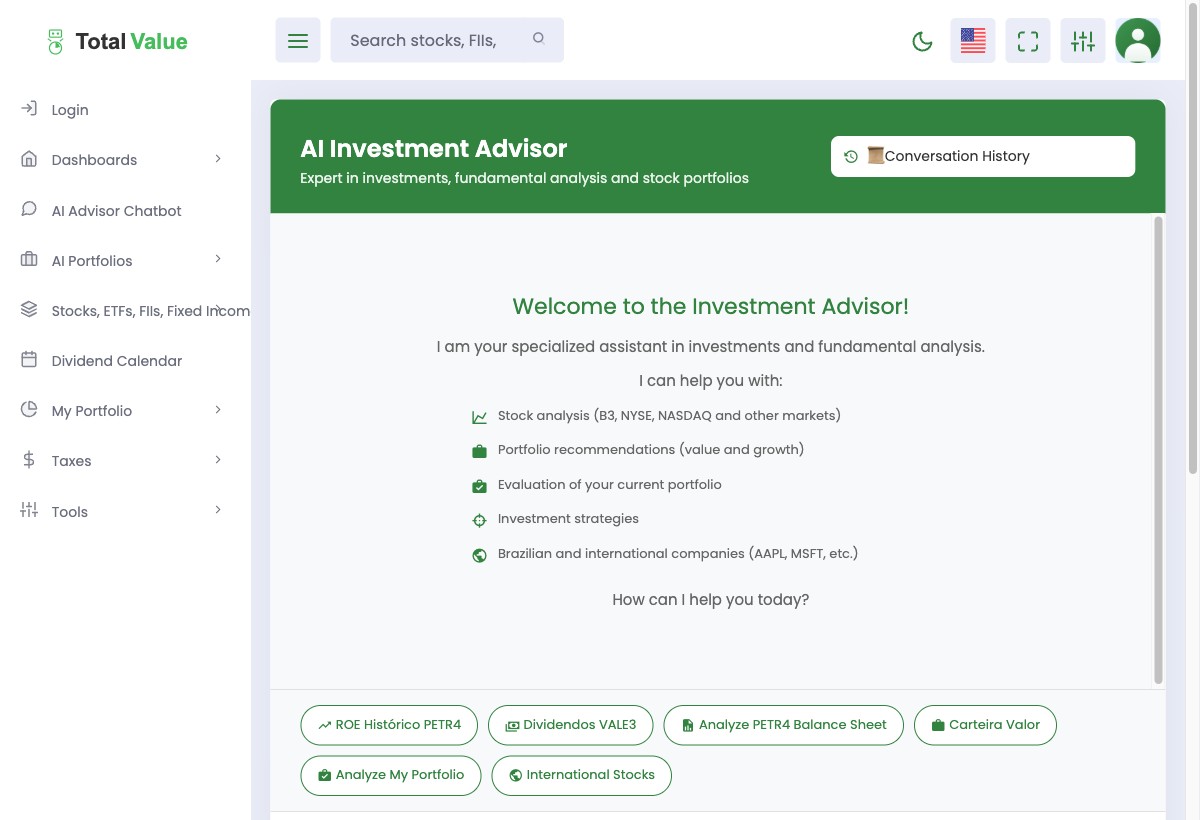
Chat with the AI AdvisorAsk in your own words and get fundamental analysis right away: indicator history with charts, a full read of any company's financial statements and an assessment of your own portfolio, with strengths, risks and rebalancing suggestions.
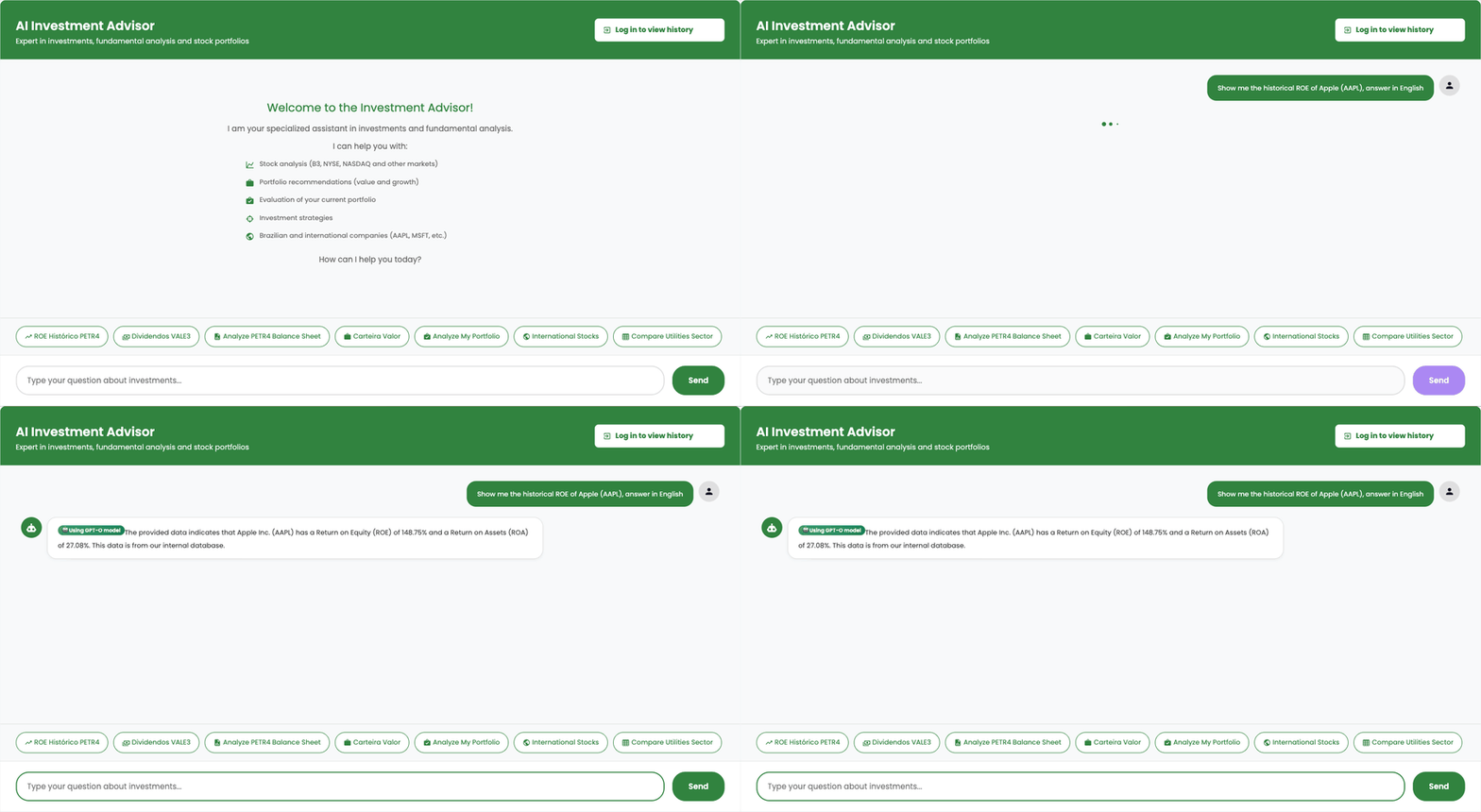
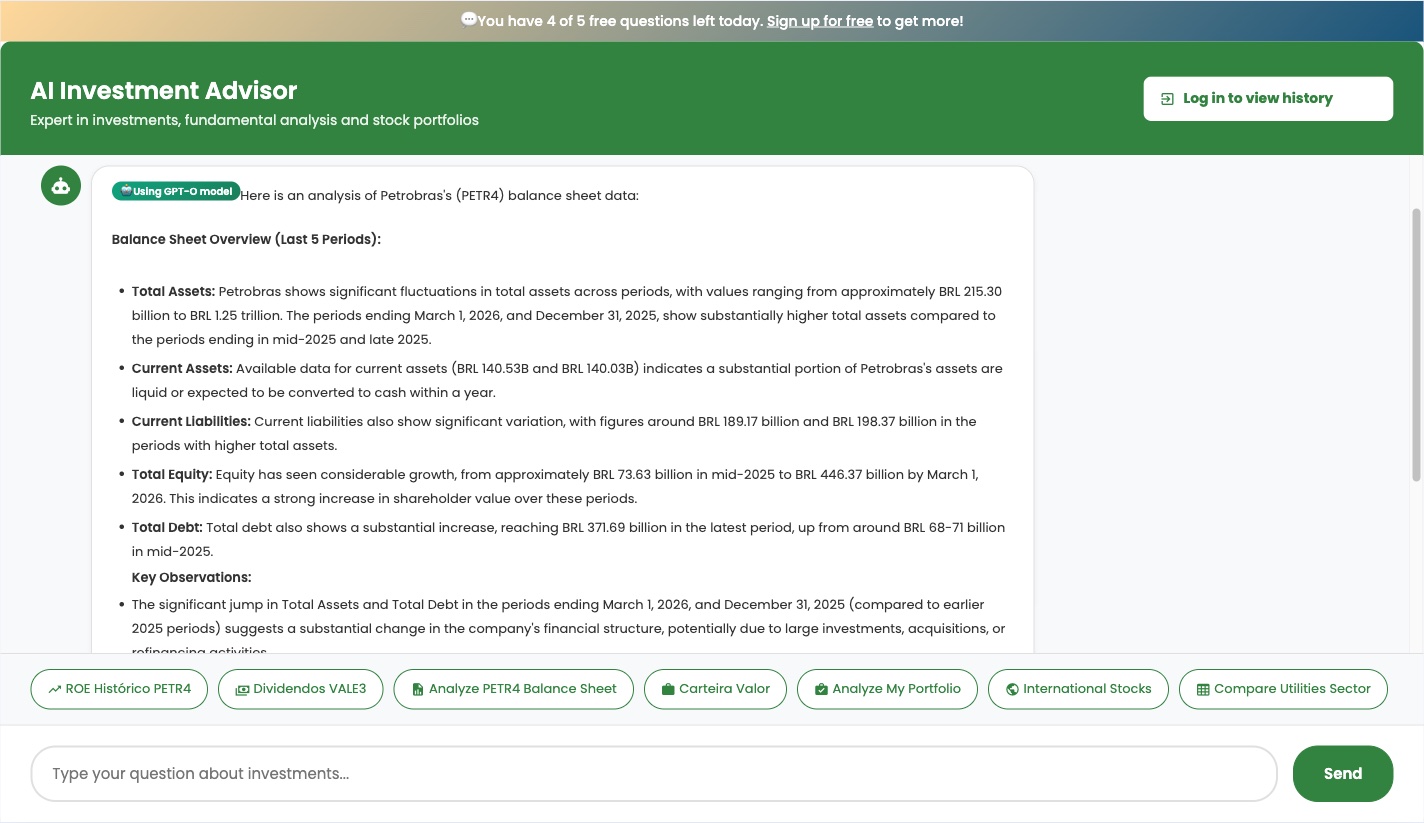
Content generated by artificial intelligence from public data and the user's portfolio. It is not an investment recommendation; always check the information before deciding.
The best tools to keep your investments under control
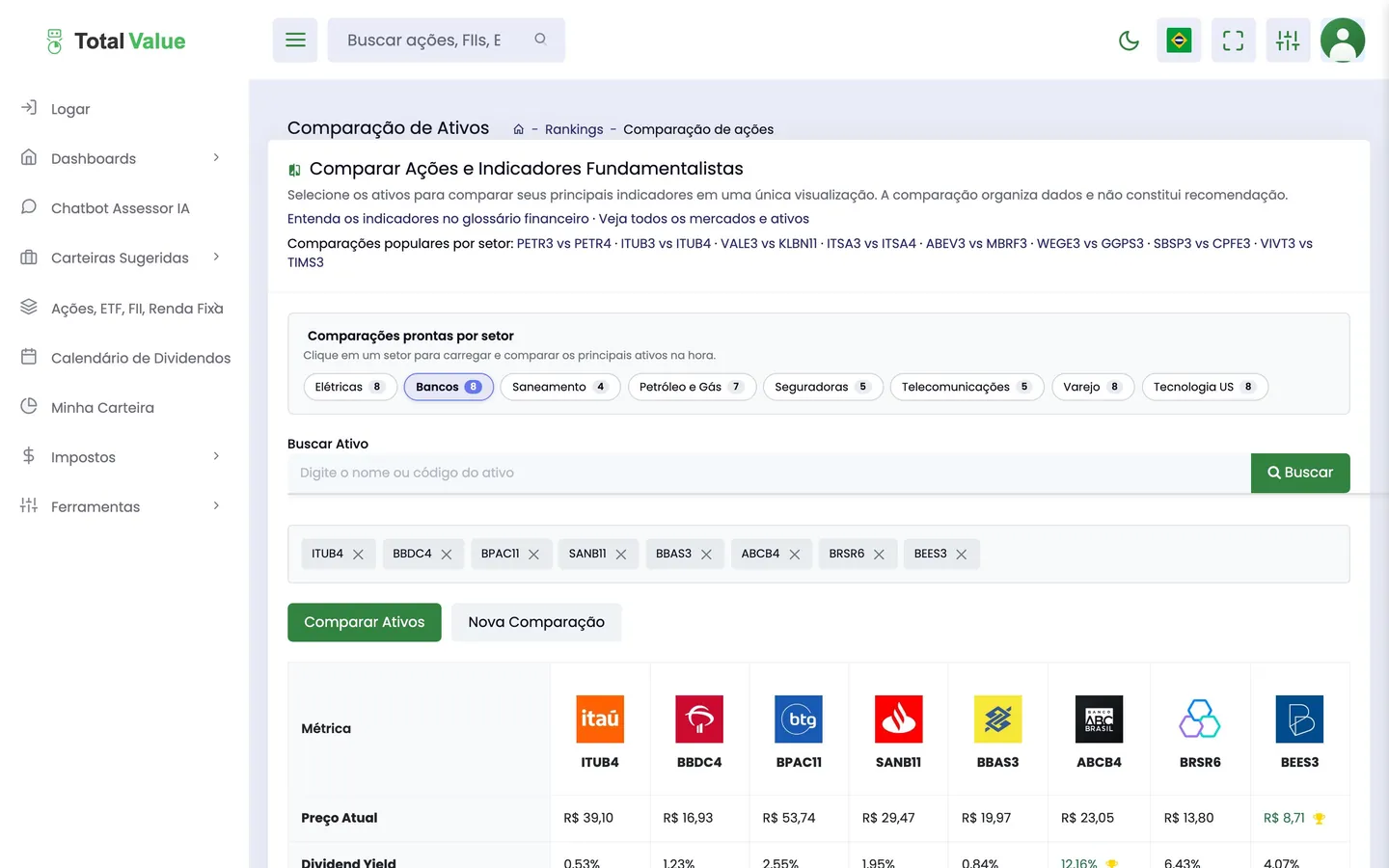
Follow each asset class with the links below
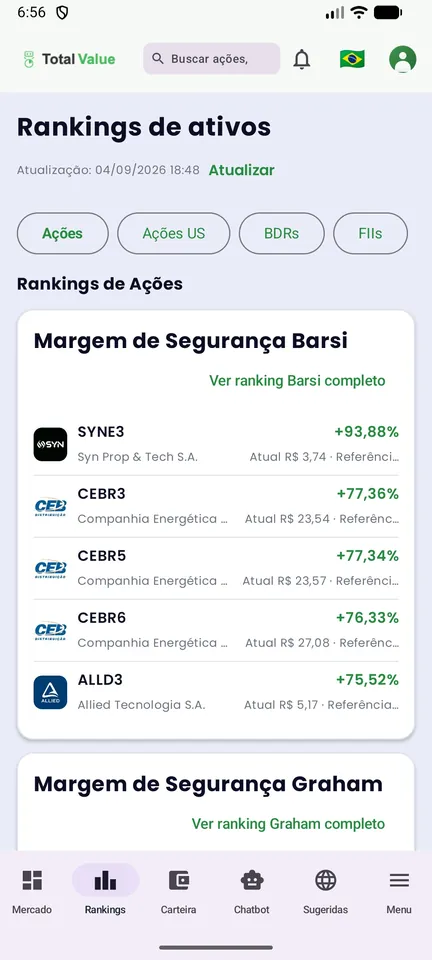
Graham Buy Price
The method of Benjamin Graham, the father of value investing and Warren Buffett's mentorBenjamin Graham taught at Columbia and wrote The Intelligent Investor and Security Analysis, the books that founded value investing. His core idea is simple: a stock is a share of a real business, and the market's daily mood often prices it far from what the business is actually worth.
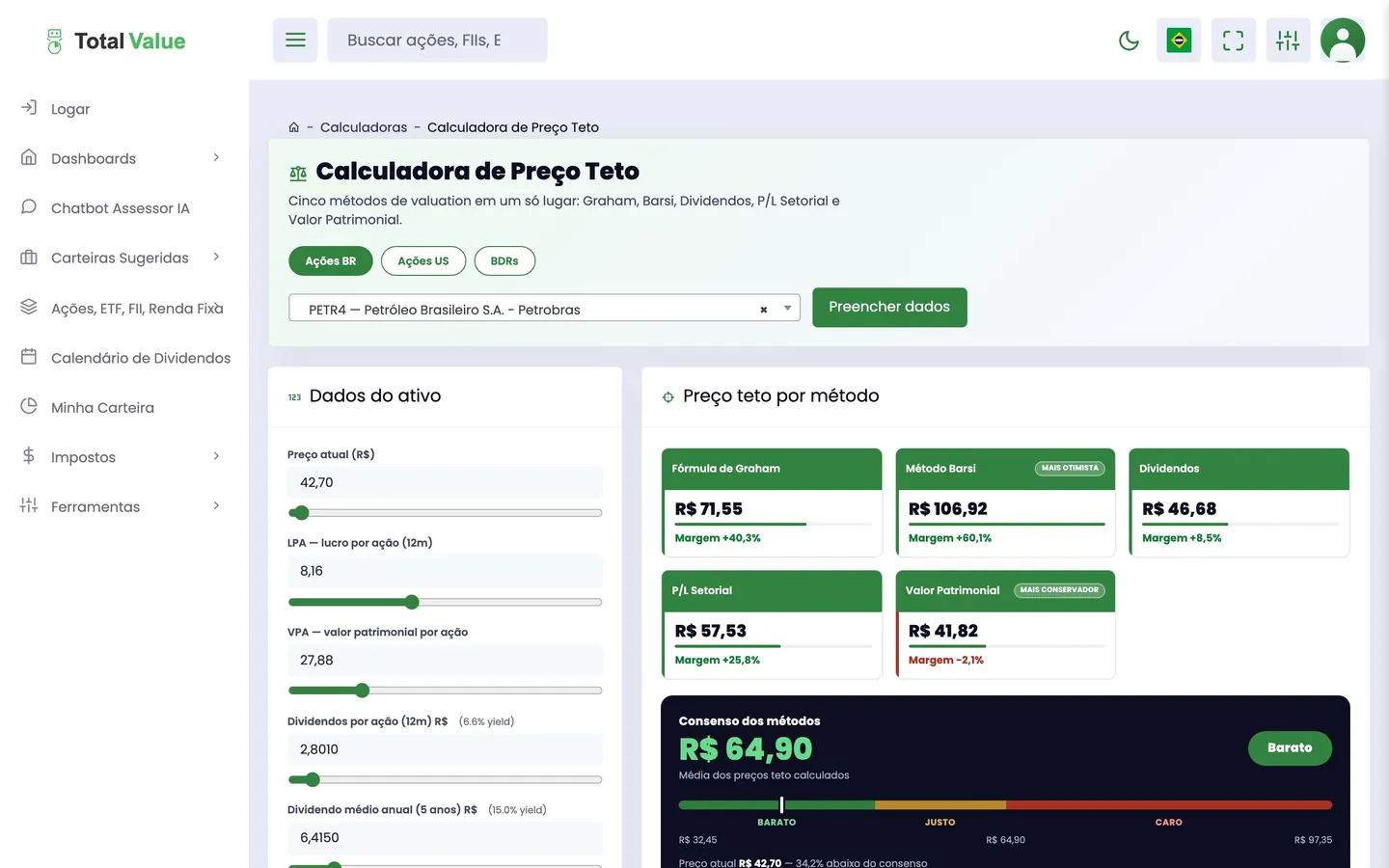
The Graham Buy Price applies his Graham Number — √(22.5 × EPS × book value per share), built from the P/E 15 and P/B 1.5 ceilings he set for a defensive investor — and ranks US stocks by how far below that value they trade, so you can see the widest margins of safety first.
- Buys only with a margin of safety between price and intrinsic value
- Relies on earnings and book value, not on market forecasts
- Treats “Mr. Market” swings as opportunities, not as guidance